Nelson Capital Management


Royal Caribbean Group (tkr: RCL) remains a best-in-class operator within the global cruise industry, supported by a diversified portfolio of brands including Royal Caribbean International, Celebrity Cruises, and Silversea Cruises, as well as a joint venture interest in TUI Cruises. The company operates a fleet of 69 ships serving more than 1,000 destinations worldwide across all seven continents. Royal Caribbean is expanding beyond its core cruise business into private and land-based destinations, positioning itself as a more comprehensive vacation provider.
The global travel market, which Royal Caribbean estimated at approximately $2 trillion, continues to benefit from strong post-pandemic demand. Consumers have prioritized travel and experiences, and cruising has emerged as an attractive option due to its compelling value proposition. The all-inclusive nature of cruises often compares favorably to land-based alternatives, supporting both demand and pricing. Industry passenger volumes have now exceeded pre-pandemic levels, with growth driven in part by increasing adoption among Millennials and Gen Z travelers, as well as a rise in multigenerational vacations.
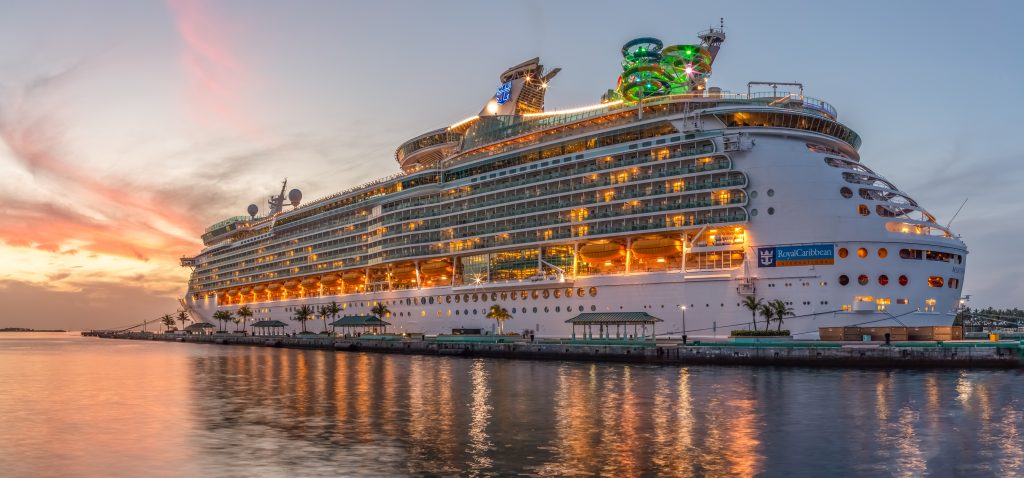 Royal Caribbean is executing well within this environment. Management continues to highlight record booking trends, with roughly two-thirds of 2026 capacity already secured at premium pricing. This level of forward visibility is notable within the travel sector and reflects strong demand as well as disciplined pricing. At the same time, the company is investing in digital tools, including AI-driven capabilities, to enhance guest personalization, improve pre-cruise engagement, and drive operational efficiencies.
Near-term margin pressure has emerged from higher fuel costs, driven by elevated oil prices and ongoing geopolitical uncertainty in the Middle East. As a result, the company modestly lowered its 2026 guidance. This dynamic is being seen across the industry, with peers such as Norwegian Cruise Line Holdings also adjusting expectations. We view these pressures as cyclical and not indicative of weakening demand. However, the company has already hedged 60% of its expected fuel expense, limiting the impact.
A key component of Royal Caribbean’s strategy is its expansion into private destinations. By increasing its portfolio of exclusive land-based experiences, the company is able to differentiate its offering while capturing a greater share of customer spending. These destinations tend to generate higher-margin revenue through activities, dining, and excursions, while also strengthening customer loyalty. People also avoid overcrowded port cities.
Looking ahead, continued investment in new ship classes and expansion into adjacent segments such as river cruising should further support growth. These initiatives broaden the company’s addressable market and create additional opportunities to engage both new and returning customers.
Royal Caribbean remains well-positioned to benefit from sustained, experience-driven travel demand. Strong booking trends, pricing power, and strategic expansion into higher-margin experiences support a favorable long-term outlook, even as near-term cost pressures persist.
The opinions expressed in this video are for general informational purposes only and are not intended to provide specific advice or recommendations for any individual. It is only intended to provide education about the financial industry. As always, please remember that investing involves risk of loss of principal and capital. Nelson Capital Management, LLC is a registered investment adviser with the U.S. Securities and Exchange Commission. Advisory services are only offered to clients or prospective clients where Nelson Capital Management, LLC and its representatives are properly licensed or exempt from licensure. No advice may be rendered by Nelson Capital Management, LLC unless a client service agreement is in place. Likes and dislikes are not considered an endorsement for our firm.
Receive our next post in your inbox.